John Carman US Customs Whistleblower Faced Federal Charges

Illegally Held for 4 years by Feds

Breaking News May 15, 2011

http://www.stewwebb.com

http://www.customscorruption.com


john.a.carman@gmail.com


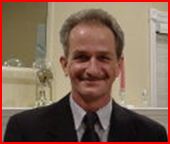
Good Guy John Carman former Secret Service Agent and U.S. Customs Agent has been illegally held for

nearly four years in Federal Prison for exposing the George HW Bush Crime Syndicate Illegal Narcotics Importation  

http://www.customscorruption.com


Special Note from Stew Webb: John needs our support get John on Radio Programs and please send John a Donation.

john.a.carman@gmail.com


Listen to John Carman on Radio

FREEDOM FIGHTERS FOR AMERICA WORLD RADIO, INTERVIEW: JOHN CARMAN
EX SECRET SERVICE, WHITE HOUSE,
(FORD-CARTER), US CUSTOMS AGENT, US MINT.
HEAR HIS STORY


 5-11-11  2HRS 12 MINS.
 http://recordings.talkshoe.com/TC-27564/TS-488015.mp3


John Carman: U.S. Customs Whistle-blower....Attorney Letter court notes


Austin Price

Attorney at Law


P. O. Box 1340

Whitley City, Kentucky 42653

Phone: (606) 376-5931

Fax: (606) 376-4401

October 9, 2007


House of Representatives

Committee on the Judiciary

2138 Rayburn House Office Bldg.

Washington, D.C. 20515


Dear Congress:


Having worked as an attorney for over sixteen years, I have tried numerous criminal

cases ranging from minor misdemeanors to capital murder. I have found that most

police officers, prosecutors and courts truly strive to be honorable and serve the

public

fairly. However, it appears that the protections that we enjoy are often denied to

those

who seek to protect us by whistleblowing on corruption, fraud, waste and abuse in our

federal government. In fact, it appears that one such whistleblower, John Carman, is

being

wrongfully imprisoned by the very people who are supposed to protect us.


In September, 2007, I had the opportunity to observe most of John Carman's criminal

trial in federal court in San Diego, California. I had previously met John through my

fiancée, Darlene Fitzgerald, who testified at his trial. Darlene and John had

previously

collaborated to expose corruption in the U.S. Customs Service. As I observed John's

trial, I was looking for a "smoking gun," some real piece of evidence that I could

say - I

see why the government would believe he is guilty. But it simply was not there.


In the mid 1990's, John was an inspector with the U. S. Customs Service (now under

the Department of Homeland Security) assigned to the San Ysidro Port of Entry, on the


California border with Mexico. John served many years with Customs and, prior to

working for Customs, was a Secret Service Officer. By the mid 1990's, John had

successfully worked for the federal government maintaining a high level security

clearance

and good standing for over 25 years.


While working at Customs, John says that he began to notice things that with all his

experience, training and expertise did not add up. John noticed that there were

things

like "overflight exemptions" being granted to suspected narcotics smugglers and drug

cartel members which allowed these highly suspect individuals to enter the U.S.

uninspected

with simply a stroke of a pen from certain Customs' managers. Further, John

noticed that important leads on suspects connected to notorious drug cartel members

that

should have be followed up, were being shut down by these very same managers. John

says that when he began to question his managers' actions, he was


 immediately retaliated against.

At about the same time frame, Special Agent Darlene Fitzgerald of the U.S. Customs

Service was running a counter-smuggling operation in Southern California, involv


1


ing pressurized rail tanker cars that were suspected of bringing tons of illegal

narcotics

into the U.S. Darlene had been with the Customs Service for just over ten years and,

prior

to that, was a captain in the U.S. Army Military Police Corps, for many years - all

in

good standing. Darlene's task force, dubbed "Operation Rite Rail," had information

that

literally tons of narcotics were being loaded into tanker cars in a rail yard in

Guadalajara,

Mexico every day, destined for the U.S. Her information turned out to be accurate

because

her task force seized 8,000 pounds of marijuana and 34 kilos of pure, uncut cocaine

in just one of these tanker cars.


Subsequently, Darlene seized five more of these tanker cars from the same front/shell

company in Mexico, manifested as empty, yet, when weighed, were found to

cumulatively contained 25 to 40 tons of contraband.


Darlene says that certain managers in her chain of command immediately began to

torpedo her operation and eventually ordered her to stop her investigation. The hold

that

Darlene had placed on these five tanker cars was then inexplicably removed, without

Darlene's knowledge or permission, allowing them to enter the U.S., uninspected by

anyone.


Darlene and her task force realized that if drug cartels could use railroad tanker

cars

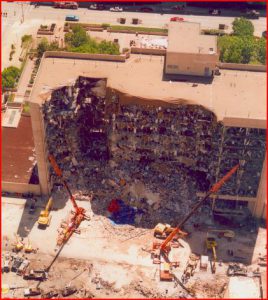
to smuggle drugs into the U.S., terrorists could also use them for attacks. Timothy

McVeigh blew up the federal Murrah Building with less than one ton of ammonium

nitrate

in an unsealed cargo truck. Terrorists could put several times this amount of

ammonium

nitrate in a sealed tanker car and, essentially, create the world's largest pipe

bomb.

While this seems too hideous to image, surely America has enemies who welcome

such an opportunity. It is no surprise to me that since Darlene left Customs, no

railroad

tanker car seizures have been made. I sincerely doubt that the drug smugglers have

simply

stopped using them.


Darlene and John, and other loyal Customs employees working with them, were then

placed between the proverbial rock and a hard place. Their instincts were screaming

that

this was more than just incompetence. Surely, no manager would perfunctorily

surrender

the acclaim and recognition that would have came with making what was probably the

largest drug seizure in U.S. history. All of these loyal government employees had

been

taught throughout their careers that the way to solve grievances was to use their

chain of

command, and so they did.


Darlene says that the real problem turned out to be the chain of command. Under the

United States Code, if a government official observes what he/she feels is a felony,

they

must report this suspected offense, or they too will be guilty of a felony -

Misprision of

Felony. As is clearly documented, these employees did their duties and reported these

offenses through their chain of command.


Yet, no investigations were ever conducted. In fact, U.S. Customs SAC Lori Brown

(the person in charge of Customs enforcement throughout Los Angeles and into Las

Vegas)

openly condoned the shut down of the investigation by Customs managers.


What these loyal government employees say happened to them can best be described

as a horror story that seems more tailored to a Grisham novel. All of these

agents/officers

had been with the government for many years and had never been placed under

investigation

by anyone for anything.


Yet, unexpectedly, as soon as they reported what they felt was major corruption, they

were placed under repeated frivolous internal affairs investigations and, eventually,


2


 IRS audits. When they locked arms and decided to fight back by going outside the

agency for help, the agency simply turned up the heat on them. Darlene and John say


 that they and five other Customs Special Agents and


Inspectors met with FBI Special Agent Rob Meza with the FBI's Public Corruptions

Office out of San Diego, California. They laid out all of their evidence and even

had a

federal prosecutor, who had witnessed much of this corruption, back them up. Agent

Meza reportedly agreed to investigate, then did not, even though millions of your tax

dollars pay for this task force to investigate public corruption.


Again, the heat was turned up even higher on the Customs employees. They say they

were harassed, investigated, passed over for promotions, threatened, surveilled by

their

own agency, and ultimately drummed out of the Customs Service, for doing their jobs.

The details of this travesty of justice are contained in a recently released book

entitled

"BorderGate, the story the government doesn't want you to read."


These agents/inspectors attempted to file a class action lawsuit against Customs for

whistleblower retaliation and EEO violations. The class action was split into several


 different federal cases. John's case moved forward separately from Darlene and her

coplaintiff's,

Special Agent Sandy Nunn's, case. Darlene's Co-Case Agent, Special Agent

Ruben Sandoval's case was split away as well. The game plan of "divide and conquer"

is

a good strategy for the government when they choose willful blindness as opposed to

seeking out the truth.


During the time frame after these Customs employees left the agency and their civil

cases were slowly snaking through the federal court system, these people did not go

quietly into the night. John developed what became a very popular website for

government

whistleblowers who feared for their jobs if they spoke out against their managers.


Here they could pass on information anonymously if they wished, although some

used John's website to publicly blow the whistle on government corruption, fraud,

waste

and abuse. As you might imagine, this website, entitled "www.CustomsCorruption.com,"

would not have been well received by those within Customs and the FBI who were the

object of the allegations. Moreover, these brave Customs employees in their attempts

to

obtain help, testified before various U.S. Congressional & Senatorial committees.


They were repeatedly in the media regarding their allegations of corruption in

Customs

and the failure of Special Agent Meza and the FBI Public Corruption Office to

investigate

their allegations. Certainly, these activities would not have been welcomed by

either agency.


Just a few weeks after the initial meeting with Special Agent Meza, John says he was

arrested by local authorities in Le Mesa, California, reportedly at the direction of

U.S.

Customs Internal Affairs. The charge was apparently so frivolous that it did not even

make it past arraignment. John was immediately released and filed another law suit

against Customs. This appears to be the first attempt to shut John up using the

criminal

courts; it would not be the last.


Ruben Sandoval's civil case was dismissed on a motion for summary judgment before

it ever went to trial. According to statistics at the Government Accountability

Project

(GAP), Whistleblowers must first utilize the Federal Merit Systems Protection Board,

and then file an appeal directly with the Federal Circuit Court of Appeals. Since

October


 1994, One Hundred Eighty-Three (183) out of One Hundred Eighty-Five (185) cases

were dismissed for decisions on the merits.


3


In February 2005, Darlene and Sandy's federal civil case was held in the San Diego

Federal Courthouse. This case made history as a landmark case. It was the first time

that a sitting judge, the Honorable Yvette Palazuelos, testified against the federal

government

as Darlene and Sandy's witness. During this trial, there was ample evidence presented

to warrant a grand jury investigation into perjury, witness tampering, and

facilitation

of the illegal importation of 25 to 40 tons of narcotics – yet there was none.


After 90% of Darlene and Sandy's case was disallowed into the trial, the jury, not

surprisingly,

found in favor of Customs. The trial is more fully detailed in Darlene's book

"BorderGate." Darlene and Sandy report that everyone on their witness list, including

John, has since been severely harassed, fired, and/or arrested.


Even with the shenanigans, Darlene and John were still willing to testify before

another

Congressional committee in May, 2007, in support of the much needed "Whistleblower

Protection Act" for federal government employees. Just two weeks before they

had planned to go to Washington, D.C., John was placed under arrest by the FBI in San

Diego on charges of conspiracy to kidnap a U.S. citizen in Mexico. The FBI's case was

based in large part on the testimony and telephone recordings of a convicted felon

and

illegal alien, Eloy Fernandez.


Eloy's felony conviction stems from his attempted framing of two Customs' employees

for crimes the FBI maintains they did not commit. Eloy's acknowledged motivation

in framing the Custom's employees was so that the government would give him U.S.

citizenship

in exchange for his providing information of a crime. After his felony conviction,

however, the FBI's headquarters reportedly blackballed Eloy from ever again being

used as a confidential informant (CI). When the FBI blackballed Eloy, they noted

that he

was desperate for U.S. citizenship and hoped to use the government to get that

citizenship

by supplying information. John's attorney, Knut Hohnson, says that by this time, Eloy

had already received over $300,000 from the government for information


in other cases.

He never paid any taxes on this money, and the government never filed any forms

with the IRS notifying them that Eloy had earned this money.


Agent Lombardi was admittedly aware that Eloy was expecting either U.S. citizenship

or a green card for his work in trying to get incriminating statements from John.

Apparently, Eloy's only duty for such a coveted status was to talk with John three

times,

while Agent Lombardi recorded the telephone conversations. These recordings were

used by Agent Lombardi to indict John.


Later at John's trial, it was apparent that John was unaware of Eloy's past.

Testimony

from numerous federal agents revealed that John had taken Eloy to various agencies

and

introduced him as a possible contact for them in Mexico. Apparently, due to

confidentiality,

these agents were not allowed to tell John of Eloy's past or that he had been

blackballed

by the FBI.


When John left Customs earlier, he had become a private investigator in San Diego.

One of his clients was George Lane. Lane had hired John for a surveillance job of his

ex-girlfriend Christie (last name intentionally omitted to preserve her privacy).

Unknown

to John or Christie, Lane, reportedly, was a consummate womanizer who had become

quite skillful at conning women. He was reputed to have been notorious for spinning

yarns that he was either a CIA agent or NSA agent, of which he was, apparently,

neither.

This information was confirmed, and uncontested during John's trial, not only by


4


Christie, but by Eloy and the government as well. Further, Darlene through her own

investigation of Lane in Maysville, Kentucky, further developed this fact.


The recordings and e-mails clearly showed that Lane had convinced John that

Christie was heavily using methamphetamine in Mexico, while in the presence of her

two young sons. They also revealed that John was under the belief that he could have

Eloy arrange for the Mexican Police (Mex. Feds) to detain, search, and arrest

Christie if

she were found to have drugs in her possession. Further they revealed that John

believed

that because of his tip, the Mex Feds would pay him a portion of any future bond that

Christie would have to post. While this sounds a bit seedy, it certainly does not

rise to the

level of kidnapping; and it is tempered by fact that John believed he would be

protecting

the children from a methamphetamine addict.


It was discovered several months prior to John's trial that the FBI knew where Lane

was located but, inexplicably, had never arrested him. Asked by John's attorney to

locate

and interview Lane, in July 2007, Darlene traveled to Maysville, Kentucky where Lane

was reportedly residing. She discovered after interviewing several residents of

Maysville,

including members of the local police and sheriffs' departments, that FBI Agent

Lombardi had interviewed Lane two months prior to her arrival. In fact, FBI Agent

Lombardi himself had traveled to Maysville along with a polygrapher and had not only

interviewed Lane but had polygraphed him and executed a search warrant on his

residence,

seizing two lap top computers. The prosecution released the information that

Agent Lombardi had obtained only after George Lane was arrested, even though John's

attorney had requested it weeks prior.


Bear in mind that Agent Lombardi and the prosecution had argued the dangerous nature

of the charges against John and his ability to abscond as justification to keep him

imprisoned. Certainly, the same would have been true for Lane; after all, Lane, who

was

an alleged co-conspirator, had obviously already departed California. If the

prosecution

and Agent Lombardi truly believed this, then why was Lane not arrested in Kentucky

when there was a clear opportunity to do so? Perhaps, it was because they did not

want

Lane present during John's trial. Certainly, it would have seemed unlikely that Lane

would have ever been discovered in Maysville, Kentucky by John's attorney who, after

all, was in California. It should be noted, that only after Darlene discovered this

critical

information was Lane eventually arrested.


John's attorney claims that immediately after John's criminal trial, Lane was

released

on bond, even though John had been held without bond throughout his ordeal. Could it

have been that since Darlene had discovered his whereabouts, Lane was being sent a

not

too subtle message discouraging him from cooperating with John's attorney?


Before John's trial began, his attorney repeatedly asked through motions to the court

for all discoverable evidence held by the government. On the Thursday before John's

trial was to begin (Sept. 19th), the prosecutor in step with Agent Lombardi relayed

to the

court and John's attorney that despite all of their best efforts, they could not

locate Eloy.


However, they still wanted to use the recorded telephone conversations between Eloy

and John as evidence. Now, at almost that same instance that this was occurring, Eloy

was telephoning Darlene in an attempt to contact journalist Bill Conroy. Bill is the

reporter

who broke the "BorderGate" story in which John, Darlene and others had uncovered.

Incidentally, Bill relates that he and his family were also severely harassed and


 intimidated by U.S. Customs after he had printed his articles. Bill had continued

to fol


5


low this story, however, and had recently published a story on John's case, which is

how

Eloy got his name.


When Eloy spoke to Darlene he told her that he needed to get in touch with Bill in

order

to, "Tell his side of the story." This begs the question, "Why does the FBI's witness

need to talk to the media to tell his story?"


Darlene passed the information on to Bill, and Eloy was later interviewed that same

day. Eloy reportedly told Bill that the FBI had lied to him and setup John. He also

said

that he had been trying to get with Agent Lombardi and the prosecutor, but they would

not return his calls. Keep in mind that this interview was happening the very day

that the

prosecutor was informing the court that Eloy could not be found. Apparently, only

after

the court refused to allow the government to play for the jury Eloy's voice

recordings

from the telephone conversations did the prosecutor and Agent Lombardi feel the need

to

return Eloy's telephone calls. When it became clear that the court was going to

enforced

John's Sixth Amendment right to confront the witnesses against him, Eloy then

miraculously

appeared just in time to testify for the government.


The evidence presented by the prosecution during John's trial was essentially Eloy's

three recorded telephone conversations with John and various e-mails. Nowhere in any

of these recorded conversations or e-mails does John ever discuss a kidnapping. The

only

mention of kidnapping came from Eloy in one of the e-mails, but nothing in the

recorded

telephone conversations. Eloy said to John, "What ever happened to that woman we

were going to kidnap, ha, ha, just kidding." John responded to this statement with

confusion

as to what Eloy had written.


The prosecution never addressed the obvious questions of why Eloy said he was just

kidding and why Eloy had not been encouraged to send e-mails to John soliciting

details

of the alleged kidnapping. After all, Eloy was certainly hoping to curry favor with

the

FBI in hopes of getting U.S. citizenship. Likewise, it is important to note that

Agent

Lombardi was present during all three recorded telephone conversations, yet he never

explained why he did not insist upon Eloy asking John specific questions about


the alleged plot. The obvious reason would appear to be that if Eloy had forthrightly

discussed such a kidnapping plot, and there was none, then John would have

immediately


began to question Eloy as to what he was talking about.


Throughout the tape recorded conversations and e-mails, John repeatedly speaks of

having Christie arrested and of bond money - not kidnapping. Further, nowhere in any

of the evidence was there any statements by John or even Eloy of a planned

kidnapping.

Presumably, the whole idea for Agent Lombardi's working with Eloy was to have him

entice John into discussing a kidnapping plot.


Yet, even with Eloy talking with John three separate times and exchanging numerous

e-mails, there are no conversations of how, when or where they would grab Christie;

what

would be used to secure her, i.e., rope, zip ties or handcuffs; whose car would be

used,

rental or personal vehicle; what time and date would it occur; where would it occur,

city

or country side; while she was alone or with someone; where she would be taken; would

she be held at a motel/ hotel or private residence; who would be watching her while

waiting

for the ransom; would they take shifts and how long would the shifts be (12 hours/

one day, one week, etc.); who would write a ransom note; how would it be written(e.g.

typed, hand written, news clippings, etc); if typed, whose computer; who would

deliver

the ransom note; what would it say; how long would they wait; who would pay the ran


6


som; how would contact be made; amount of ransom; method of delivery and pick up of

the ransom. The lack of these details, or the thousands of other details that would

have

arisen had there been a kidnapping plot, were never addressed by the prosecution.

Could

it be that they do not exist? Moreover, when Eloy took the stand, he was given ample

opportunity to describe the details of a kidnapping plot had he and John ever

actually discussed

such a thing.


Surely, had he and John ever had such conversations, recorded or not, Eloy could

have easily lured John into discussing them during the recorded telephone

conversations,

yet they were not even alluded to.


In order to understand why the expenditure of $300,000 for Eloy may seem contrary

to government policy, it is necessary to review the apparent corruption that Darlene

had

blown the whistle on when she worked for Customs.


As stated above, in 1998, Darlene and her task force seized 8,000 pounds of marijuana

and 34 kilos of pure, uncut cocaine from a single railroad tanker car. They then

seized five more tanker cars containing 25 to 40 tons of contraband and had them

parked

in a rail yard awaiting approval to be opened. Her manager Assistant Special Agent in

Charge (ASAIC) Gary Pinkava refused to allow her to inspect the tanker cars and

ordered

her not to complete her investigation. Later, he gave numerous reasons for not

allowing

the inspection of the tanker cars, which initially included him stating at a

deposition that

he did not even remember the tanker cars. After several other witnesses testified

that

Pinkava had in fact been specifically told about the tanker cars and after he was

reminded

of the fact that this would have been difficult to forget since it would have been

potentially

the largest drug seizure in U.S. history, his memory surprisingly improved. His

second excuse was that he had told Darlene's immediate supervisor, Robert Mattivi, to

inspect the tanker cars.


When this assertion was refuted by Mattivi, Pinkava then said that it would have cost

too much to open the tanker cars. Incidentally, this was also argued by the

government

in Darlene's civil trial as justification for thwarting her investigation. (Case

styled as

Darlene Fitzgerald -Sandy Nunn Vs. Department of Homeland Security, civil docket in

San Diego Federal Court; (a complete transcript of ASAIC Pinkava's testimony may be

read at www.BorderGate.net)). It was presented in court that the cost to safely open

and

inspect one of these tanker cars would have been approximately $8,000.


Now, when you compare the refusal by certain officials within our government to the

spending of even a relatively small amount of money to generate the country's largest

drug seizure with the amount they are willing to spend on a witnesses such as Eloy,

it

paints a disturbing picture. This is even more disturbing when you read ASAIC

Pinkava's

trial testimony from the Fitzgerald/Nunn civil case wherein he admitted, without

equivocation,

that he would not even allow Darlene and Robert Mattivi to pressure test

the tanker cars for free. Darlene says that she had arranged to have the tanker cars

pressure

tested at no cost to the government, and yet ASAIC Pinkava still ordered her not to

do her job. No investigation has ever been conducted into why a high level Customs

manager would actively thwart such an investigation.


In his criminal trial, John, unfortunately, got assaulted by a perfect storm. First,

he

was against young prosecutors who appeared more than eager to impress their superiors

by obtaining a conviction on John - the man who had embarrassed some by maintaining a

website exposing corruption within the federal government. A more seasoned prosecutor


7


surely would have insisted upon Agent Lombardi having Eloy to get John to discuss

details

of the alleged kidnapping plot, or seek a wire tap on John's telephone. Certainly,

appropriate

safeguards could have been initiated to protect Christie while the investigation

was properly conducted. And, clearly, the government has not been concerned with s

pending too much tax payer money on certain investigations.


Second, the criminal case against John was being managed by an FBI agent whose

own agency had been specifically singled out by John for its refusal to investigate

public

corruption. Third, John's jury consisted of jurors who had only been superficially

questioned

by the court using cursory questions. John's attorney was not permitted to ask any

questions of the jury, and the court did not ask any probing questions that might

have uncovered

biases against John.


Clearly, the prosecution team showed no intentions of prosecuting John fairly. As

stated above, Agent Lombardi and the prosecution did not divulge evidence

voluntarily,

timely, or sufficiently. During the presentation of the case, they introduced the

three recorded

statements and various e-mails covering a plethora of topics and investigations

that John was discussing with various people.


Then, during his closing argument, the prosecutor incessantly took excerpts from

those documents and pieced them together, often out of context. A clear example of

this

was when the prosecutor took just one sentence from an e-mail in which John was

discussing

a hotel in Mexico. The prosecutor presented this as one of his "Ah-hah!" moments,

telling the jury that this proved that this was the location where John and Eloy

were going to take Christie. What the prosecution did not reveal to the jury was

that the

e-mail had been sent two years prior to this alleged conspiracy.


John's attorney attempted to rectify this misstatement of fact, and displayed the

date

to the jury, but the wound had already been inflicted. Even though this piece of

evidence

was clearly refuted by John's attorney, the prosecutor continued to present

statements out

of context, even when they clearly referred to entirely different matters.


Another example of this came when the prosecutor took a statement in which John

was talking of a reward on another case he had been working on. At no time during

this

conversation was Christie referenced. In fact, John spoke of the other case he had

been

working on. John's attorney even had another investigator testify that he and John

were, in fact, talking about a reward for a case he had given John. Yet the

prosecutor

continued to present this statement out of context repeatedly and referred to it as

"ransom" for Christie. Objections were raised, arguments were made; the court

instructed

the jury; but the damage was apparently too great to overcome.


The prosecutor then got to present his closing argument to the jury, twice. In

federal

court, the prosecution is allowed to present, essentially, two closing arguments.

John's

attorney was permitted only one closing argument, smothered between the prosecution's

two arguments.


On September 26th, John was found guilty, much to the shock and dismay of those

who had observed the trial and were aware of the whistleblower retaliation. The

message

sent by those in power in San Diego appears to be that whistleblowing on waste,

fraud,

abuse and corruption will not be tolerated.


It is also important to note that in May of this year as John remained incarcerated,

Darlene Fitzgerald did in fact go to Washington, D.C. and testified in support of the

"Whistleblower Protection Act" also known as the "Akaka Bill" after Senator Akaka


8


who helped author it.


It was officially read into the record that over 700 federal government employees

wanted to appear and testify at this hearing. This clearly shows just how pervasive

and

systemic whistleblower retaliation has become. As I am writing this letter, this much

needed piece of legislation sits idle at the Senate.


Since I first began practicing law, I have never truly felt that I knew, without a

doubt,

that an innocent man had been convicted of a crime he had not committed. John's case

changes that. On behalf of John and all brave whistleblowers, I beseech you to

appoint a

special prosecutor and initiate a formal investigation into these cases. If you

passively

allow whistleblowers, such as John Carman and Darlene Fitzgerald, to be silenced,

then


no one can be expected to have the courage to report corruption, fraud, waste and

abuse

within our government.


Our beloved country can scarcely afford to be without the eyes and ears of whistle-

blowers at a time when so many of our enemies, both foreign and domestic, seek to do

us

harm.


Sincerely yours,


Austin Price, Esquire


CC:

U.S. Senate Committee on the Judiciary

Senator Harry Reid

The Government Accountability Project (GAP)

The Project on Government Oversight (POGO)

Senator Daniel Akaka

Congressman Dana Roherbacher

Senator Charles (Chuck) Grassley

9